

EN 60068-2-27

KEY POINTS AT A GLANCE
DIN EN 60068-2-27
DIN EN 60068-2-27 is an international environmental testing standard that specifies how products are tested for mechanical shock loads. It simulates real-world impact events such as drops, hard impacts, transport stresses, or crash-like situations. It is one of the most important standards for the mechanical qualification of batteries, electronics, industrial, and automotive components.
Why DIN EN 60068-2-27 is important:
Mechanical shocks can have the following effects:
-
Cracked cases
-
cell damage
-
Interruptions in contact
-
internal short circuits
-
malfunctions
The standard ensures that products function reliably even under sudden, heavy loads. Our services in accordance with DIN EN 60068-2-27.
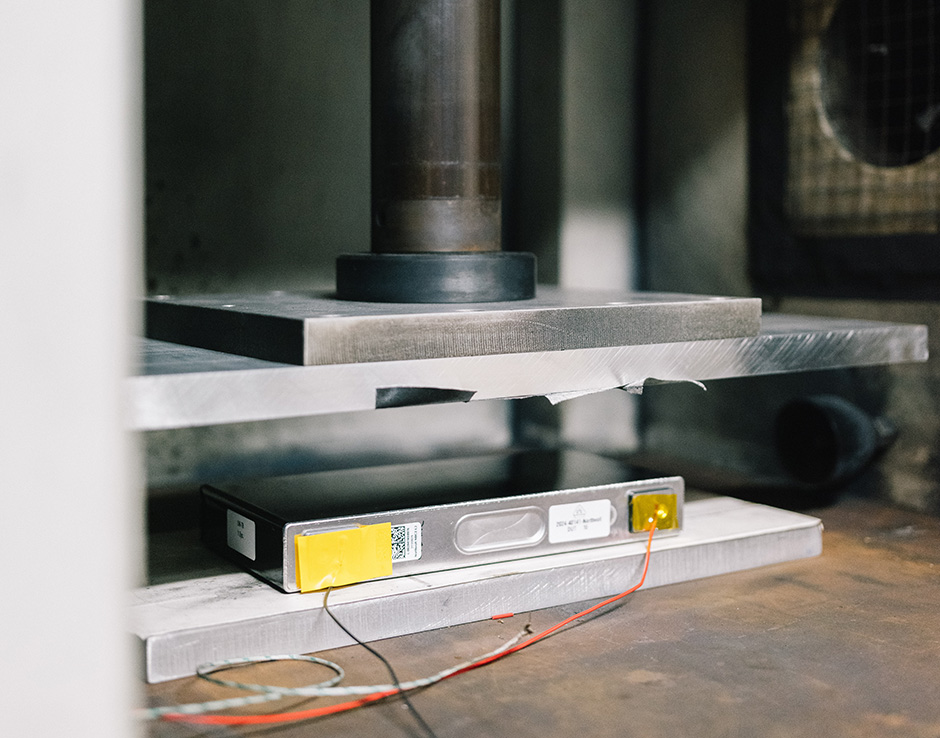
We offer all the necessary tests to ensure full compliance:
Accredited testing laboratory
We perform shock tests in accordance with industry standards using precise measurement technology—suitable for batteries, electronics, automotive modules, and industrial products.
Many years of experience
Our test engineers have extensive expertise in conducting shock tests in accordance with 60068-2-27, including complex test profiles for safety-critical applications.
Testing services from a single source
We offer:
Shock tests using half-sine, square, or trapezoidal pulses; tests with forces of up to several thousand g; multiple shock sequences
Fast turnaround times
Optimized processes ensure fast, reliable results.
State-of-the-art laboratory technology
Our shock tables enable precise pulses with high repeatability.
Customized test programs
We tailor the shock parameters precisely to your product requirements.
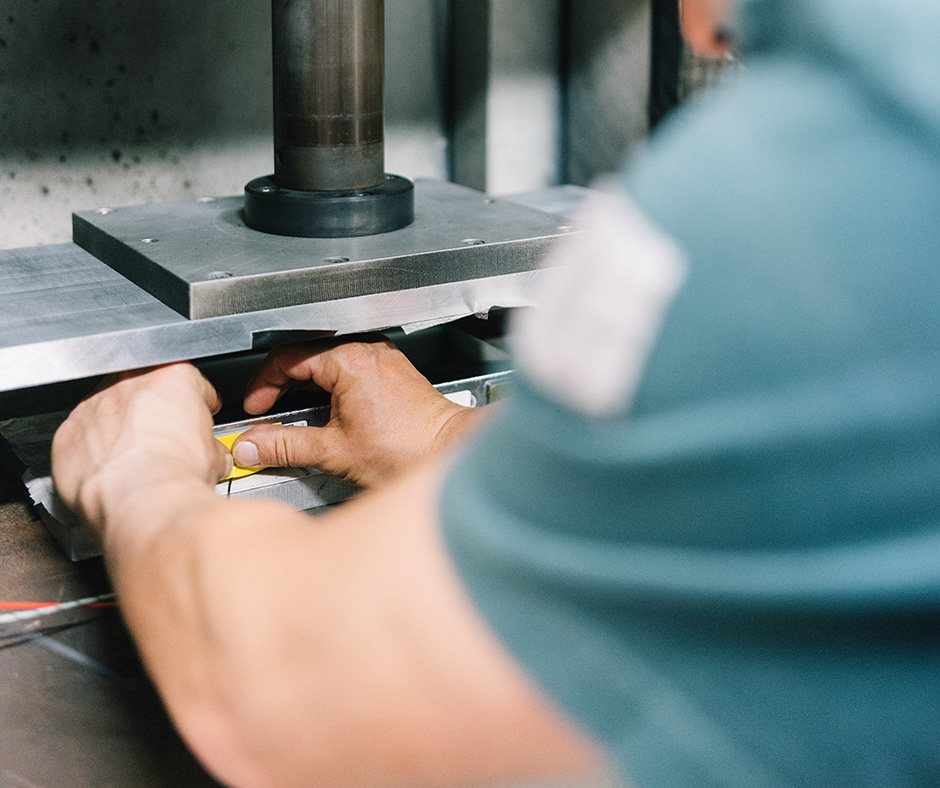
Mechanical shock tests
Typical parameters:
-
Mold shape: Half-sine wave, rectangle, trapezoid
-
Acceleration: e.g., 30 g, 50 g, 300 g, or more
-
Pulse duration: 6 ms, 11 ms, 18 ms, 30 ms, etc.
-
Number of shocks: usually 3–18 per axle
Purpose of the audit
-
Proof of mechanical robustness
-
Identification of vulnerabilities
-
Ensuring functionality after a shock
FREQUENTLY ASKED QUESTIONS & ANSWERS
EN 60068‑2‑27 specifies mechanical shock testing. Short, defined shock pulses are applied to evaluate robustness, structural integrity and failure resistance.
A product's ability to withstand sudden, severe mechanical stress.
Electronics, batteries, automotive components, industrial modules, medical technology, aerospace.
Half-sine, square, trapezoidal—depending on the application.
Both tests cover different mechanical stress scenarios and help identify weak points early, reduce field failures and improve overall product reliability.
A wide range of electronic and electromechanical systems: batteries, modules, packs, control units, sensors, industrial electronics, automotive components, aerospace systems and more.
Frequency range, acceleration (g‑levels), displacement, pulse shape, pulse duration, axes, resonance behaviour and structural changes.
Shock tests usually take a few hours; vibration tests can take several hours to multiple days, depending on scope.
Yes. Batteryuniversity operates accredited vibration and shock test systems and performs both standards regularly – including for large battery modules and packs.
STAY INFORMED
Additional relevant standards and regulations for lithium-ion batteries that are critical to safety, performance, and regulatory requirements.



ABOUT THE AUTHOR
Alexander Roth
Alexander Roth is the head of the testing laboratory at Batteryuniversity and an expert in the testing and certification of lithium-ion batteries.